Fire Damage Restoration in Murfreesboro, TN
After a house fire the damage keeps spreading through soot, smoke odor and the water used to put it out. Our fire damage restoration crew in Murfreesboro, TN secures the house, dries it, cleans it and rebuilds what was lost.
Call now: (615) 821-1402- Only go back in when the fire department says it’s safe
- Leave utilities off until they’re checked
- Photograph everything before cleanup
- Call your insurer and start the claim
- Don’t wipe soot: it smears and sets
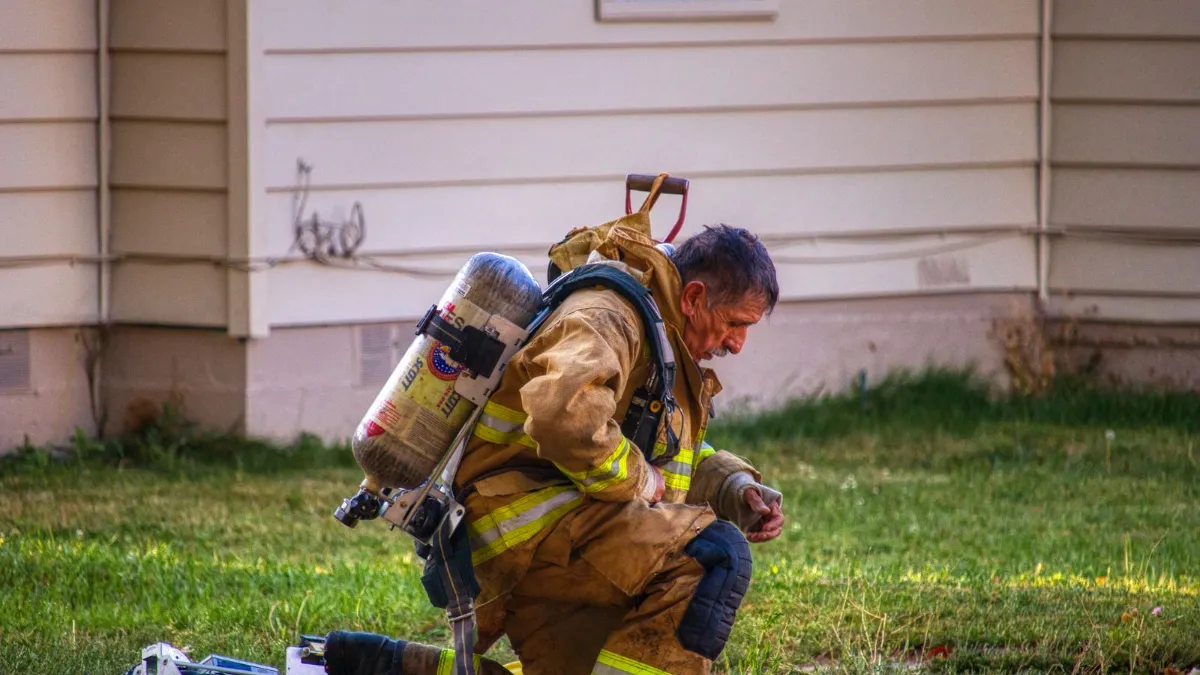
Board-up and tarping
A fire-damaged house is open to rain, animals and break-ins. The first job is securing it: broken windows and doors boarded, holes in the roof tarped. Most insurance policies expect you to protect the property from further damage, and board-up does that.
Water from firefighting
Fire hoses put hundreds of gallons into a house in minutes. That water soaks drywall, insulation and subfloors far from the fire itself, and left alone it turns into mold. Extraction and drying start right away, the same way as any water damage restoration job, with moisture readings until the structure is dry.
Smoke damage and soot removal
Soot is acidic and oily, and it travels through the whole house on air currents and through the HVAC system. It stains and etches surfaces the longer it sits. Different fires leave different residue: fast, hot fires leave dry, powdery soot; slow, smoldering fires and kitchen fires leave a sticky film. Each needs a different cleaning method, so we test surfaces before cleaning.
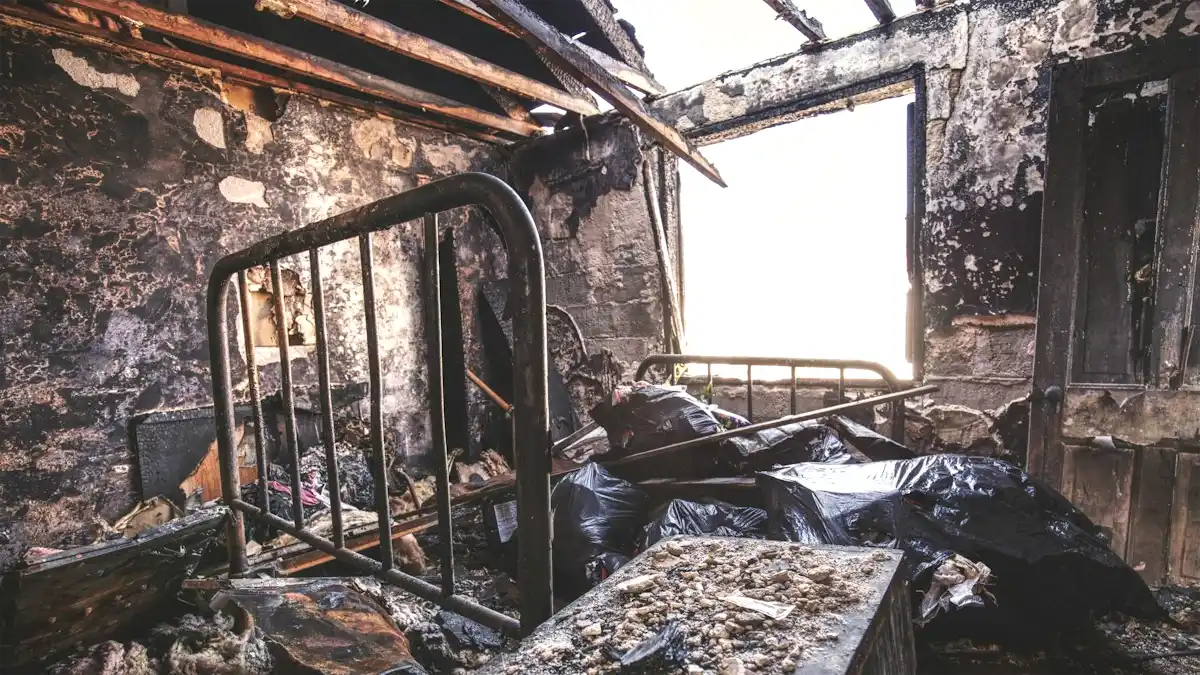
Dry soot is removed with HEPA vacuums and dry chemical sponges before any wet cleaning, because water smears it deeper. Ductwork is cleaned, or soot just blows back out when the system restarts.
Odor removal
Smoke odor gets into drywall, framing, insulation and fabrics. Air fresheners only cover it. Removal means taking out what can’t be cleaned, cleaning and sealing what stays, and then treating the air and structure with methods like thermal fogging or hydroxyl generators until the smell is gone, not masked.
Contents cleaning
Many belongings can be saved: clothing, hard furniture, dishes and some electronics. Items are inventoried, packed out if needed, cleaned and stored while the house is repaired. The inventory doubles as documentation for your claim.
Kitchen fires and protein residue
Most house fires start in the kitchen, and a burned pot of food can leave damage out of proportion to the flames. Protein residue is nearly invisible, sticks to walls and cabinets as a yellowish film, and has a strong, lingering smell. It needs degreasing cleaners and careful odor treatment; ordinary wall cleaning just spreads it.
HVAC and hidden smoke
If the system was running during the fire, smoke and soot went through the ducts to every room. The air handler, coil and ducts are inspected and cleaned, and filters replaced, before the system runs normally again. Smoke also travels into wall cavities, attics and closets, which is why odor sometimes returns on humid days if only the visible surfaces were cleaned.
Rebuild and fire damage repair
Once the structure is clean and dry, we rebuild: framing, drywall, insulation, flooring, cabinets and paint. You get a written scope before work starts, so you and your adjuster know what’s being replaced.
Working with your insurance
- Report the claim as soon as you can
- Keep receipts for hotel, meals and emergency purchases
- Don’t throw out damaged items until the adjuster has seen them
- Ask for the scope of work in writing
- Use a first day, week and month checklist
What shapes a fire restoration job
| Factor | Smaller job | Bigger job |
|---|---|---|
| Fire size | Contained to one room | Spread through the house or roof |
| Smoke spread | One area | Through ducts to every room |
| Water used | Extinguisher only | Hoses, soaked floors and walls |
Questions after a house fire
Can I clean soot myself?
Small amounts of dry soot on hard surfaces, maybe. Wiping with water usually smears it and sets the stain. Larger areas, fabrics and anything from a kitchen grease fire are best left to a crew.
How long does fire restoration take?
Cleanup and drying often take one to two weeks for a contained fire. Rebuild time depends on how much has to be replaced.
Will the smoke smell ever go away?
Yes, when the source materials are removed or sealed and the structure is deodorized. Masking sprays don’t last.
Is it safe to stay in the house?
Not until the fire department, and often the utility companies, say so. Smoke residue can also irritate lungs.
Call and we’ll walk you through the next steps.