Water in Your Basement After Rain: Causes and What to Do
Water in a basement after rain almost always comes from outside: rainwater that isn’t carried away from the house, or groundwater pushing in through the floor and walls. Where it shows up tells you which, and that decides the fix.
Updated November 2026 · 7 min read
First, today
- Don’t walk into standing water if it’s near outlets, cords, the furnace or the water heater. Have the power to the basement shut off first.
- Check the sump pump if you have one. A tripped outlet or stuck float is the most common reason a basement floods during a storm.
- Get water out with a wet-vac or pump, and move boxes, rugs and furniture to dry ground.
- Take photos of the water line on the walls and anything damaged.
- Run a dehumidifier with the windows closed. Opening windows in humid weather adds moisture.
Where the water shows up, and what it means
| Where you see it | Likely cause | Usual fix |
|---|---|---|
| Along the base of the walls | Groundwater pressure at the joint between wall and floor | Interior drain to a sump pump |
| Under one window | Window well filling up | Clear or add a drain, add a cover |
| Down one wall below a downspout | Roof water dumped at the foundation | Extend downspouts several feet out |
| Through cracks in the wall | Shrinkage or settlement cracks | Crack injection; check for movement |
| Up through the floor or floor drain | High water table or a backed-up drain | Sump system; backwater valve for drains |
| Dampness everywhere, no puddles | Condensation on cool walls | Dehumidifier, insulate cold pipes |
A simple test separates condensation from seepage: tape a square of plastic wrap tight to the wall for two days. Moisture on the room side is condensation; moisture behind it is coming through the wall.
Why it happens around Murfreesboro
Rutherford County sits on limestone with heavy clay soil on top. Clay drains slowly, so after a long soaking rain the ground around a foundation stays saturated and presses water against the walls. Basements here are also less common than slabs and crawl spaces, and many were dug into sloped lots where water from uphill drains straight toward the house.
What you can fix yourself
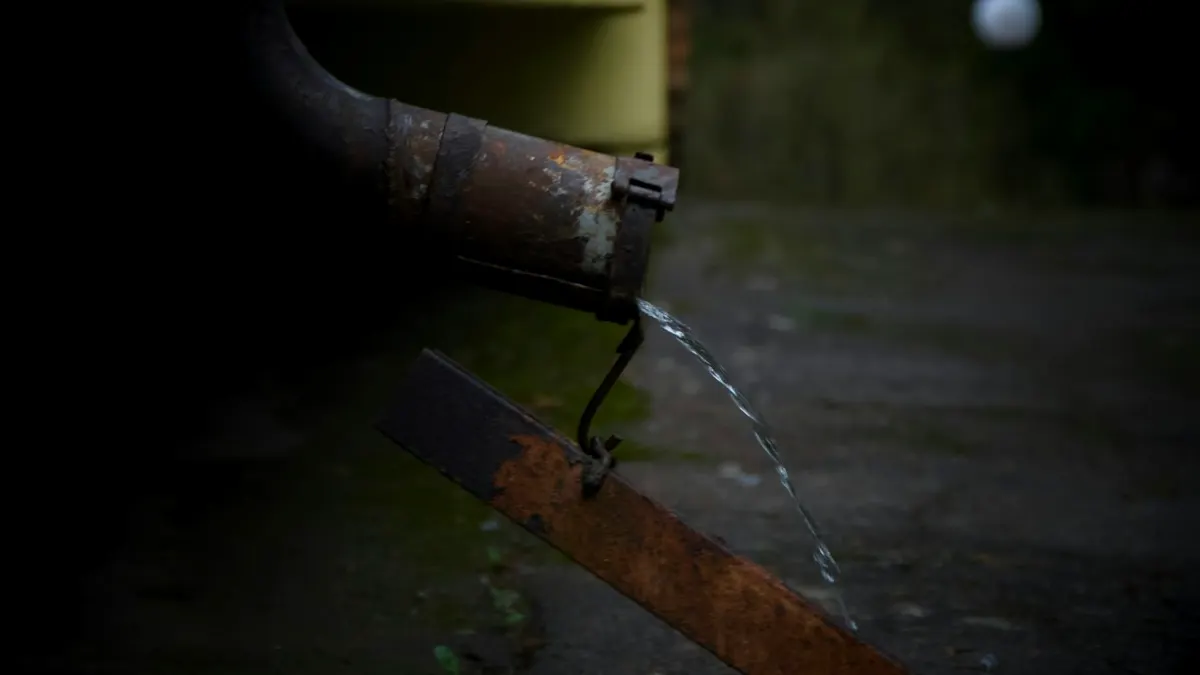
- Clean the gutters and make sure every downspout empties well away from the house.
- Regrade soil and mulch so the ground slopes away from the walls, not toward them.
- Clear leaves out of window wells and add clear covers.
- Test the sump pump by pouring a bucket of water into the pit; read the sump pump guide if it doesn’t kick on.
When it needs a professional
If water comes back after every heavy rain even with gutters and grading sorted, the water is coming through the foundation and needs a drainage system: an interior perimeter drain and sump pump, sealing, or outside excavation in some cases. Read how basement waterproofing is done. If the basement is already flooded, soaked drywall, carpet or stored belongings need to be dried or removed within a day or two to stop mold.
Basement water questions
Will the water in my basement dry out on its own?
A damp patch on bare concrete may. Standing water, wet carpet or wet drywall won’t dry fast enough on its own to prevent mold; remove the water and run dehumidifiers.
How serious is water seepage in a basement?
A little dampness after a rare storm is common. Water every time it rains, cracks that widen, or walls that bow inward are serious and should be looked at.
Why does my basement only leak in heavy rain?
Light rain soaks into the soil; heavy or long rain saturates it, and the water pressure against the foundation pushes water through joints and cracks.
Does insurance cover a wet basement?
Usually not for seepage or groundwater. Water from a burst pipe is often covered, and sump pump failure only with a water backup endorsement. Flood insurance is separate.