What to Do When a Pipe Bursts
Shut off the main water valve first, then cut power to any wet area. Everything else, from draining the lines to calling a plumber and drying the house, comes after the water stops.
Updated November 2026 · 6 min read
Do these two things now
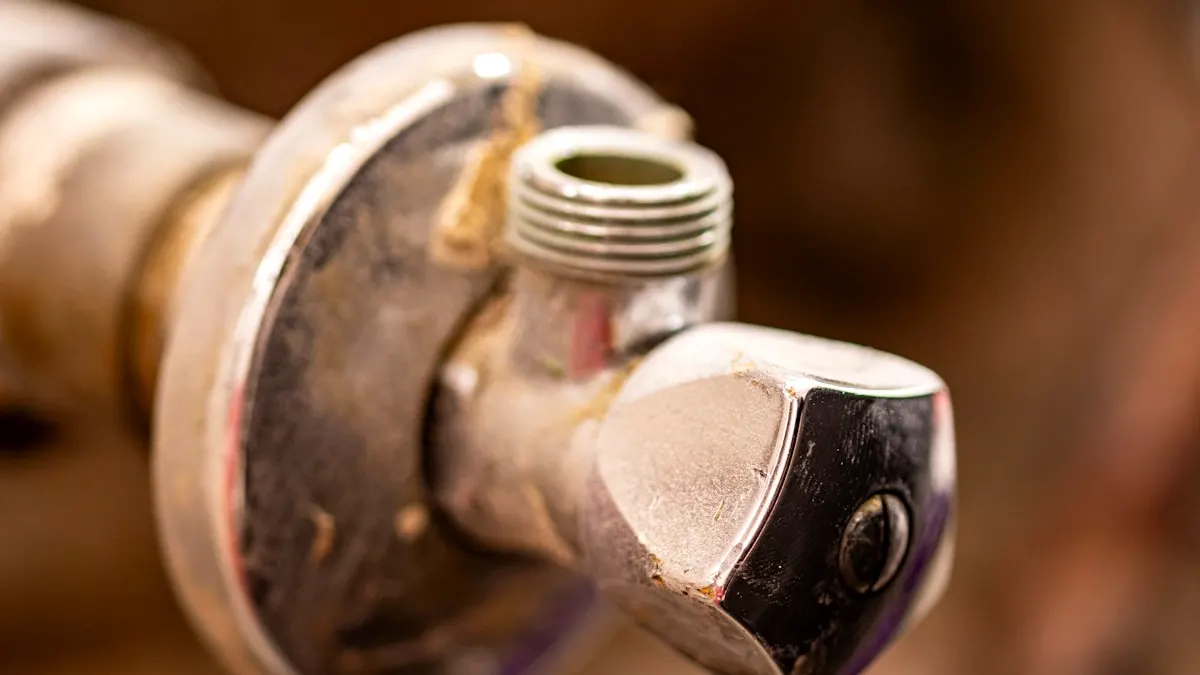
- Close the main shutoff. Turn the valve clockwise (or turn a lever valve a quarter-turn so the handle sits across the pipe).
- Stay out of water near outlets, cords or the panel. Switch off the breaker for that area only if you can reach the panel while standing somewhere dry.
Where the main water shutoff is
In most Middle Tennessee homes it’s in one of three places: where the water line enters the house (a crawl space wall, basement wall or utility room), near the water heater, or in the meter box at the street. The meter box valve usually needs a meter key or a wrench. If you can’t find or turn any of them, call your water provider; in Murfreesboro that’s Murfreesboro Water Resources or Consolidated Utility District, depending on your address.
Step by step after the water is off
- Drain the lines. Open the cold taps at the lowest point in the house and flush the toilets. This empties what’s left in the pipes so less leaks out.
- Turn off the water heater if the break is on the hot side or the tank may drain: power off for an electric heater, pilot to “vacation” or off for gas.
- Photograph everything before you move or throw out anything: the pipe, the water, ceilings, floors and belongings.
- Get the water out. Mop, wet-vac and towel what you safely can. Lift furniture onto blocks or foil and move rugs, papers and electronics out.
- Call a plumber to repair the pipe and your insurer to start the claim.
- Start drying the same day. The EPA advises drying wet materials within 24 to 48 hours to prevent mold growth. Fans alone rarely dry wall cavities, subfloors or insulation.
Frozen pipes: the Murfreesboro version of this problem
Most burst pipes here happen during the few hard freezes each winter, in pipes running through crawl spaces, exterior walls and unheated garages. A frozen pipe often doesn’t leak until it thaws, so a break can show up hours after the cold snap ends. If a tap gives only a trickle on a freezing morning, the line is likely frozen: keep the tap open, open cabinet doors to let warm air in, and warm the pipe with a hair dryer. Never use an open flame.
Signs a pipe burst where you can’t see it
- The water meter keeps moving with every tap closed
- A sudden drop in water pressure
- Wet spots, bubbling paint or sagging on a ceiling or wall
- The sound of running water when nothing is on
- A musty smell or puddles in the crawl space
When it needs a professional
A small leak onto tile that you caught right away can be dried with fans and a dehumidifier. Call a restoration crew when water soaked carpet and pad, ran into walls or the floor below, sat for more than a day, or got under the house. Moisture hides inside drywall and subfloors, and it’s measured with meters, not by touch. See how water damage restoration works, or read about water in the crawl space if the break was under the house.
Burst pipe questions
How urgent is a burst pipe?
Very. A broken supply line keeps flowing at full household pressure until the main is shut off, so minutes matter. After the water is off, the next deadline is drying: wet materials should be dried within 24 to 48 hours.
Will water keep coming out after I shut off the main?
Only what’s left in the pipes and, if the break is on the hot side, the water heater. Opening the lowest taps drains it faster.
Does homeowners insurance cover a burst pipe?
Most policies cover sudden, accidental breaks. Damage from a slow leak, or a freeze in a house left unheated, may be denied. Check your policy and report the claim quickly.
Can I turn the water back on after a temporary patch?
A clamp or patch kit can hold for a short time to keep water running, but it isn’t a repair. Have a plumber replace the damaged section.
How do I stop pipes from freezing?
Insulate pipes in the crawl space, garage and outside walls, keep the crawl space vents and doors closed in winter, disconnect garden hoses, and let a tap drip on the coldest nights.