Sump Pump Not Working? Troubleshooting by Symptom
Most sump pump failures come down to four things: no power, a stuck float switch, a clogged intake or discharge line, or a worn-out motor. Match what yours is doing to the table below to find which.
Updated November 2026 · 6 min read
Safety first
- Unplug the pump before reaching into the pit.
- If the basement floor is already flooded, don’t step in the water until power to the area is off.
Find the problem by what the pump does
| Symptom | Likely cause | What to try |
|---|---|---|
| Completely dead | Tripped GFCI outlet or breaker, unplugged | Reset the outlet and breaker; plug a lamp in to test |
| Water rising, pump doesn’t start | Float stuck against the pit wall or in debris | Free the float; center the pump in the pit |
| Hums but doesn’t pump | Jammed impeller, clogged intake, frozen or blocked discharge | Clean the screen and impeller; check the outside line |
| Runs nonstop | Float stuck on, failed check valve, or more water than the pump can handle | Check the float and check valve |
| Turns on and off every few seconds | Short cycling: float set too low, pit too small, or check valve failure | Adjust the switch; replace the check valve |
| Loud grinding or rattling | Debris in the impeller or worn bearings | Clean it; replace if the noise stays |
How to test a sump pump
- Check that it’s plugged in to a working outlet. Sump pumps should be on their own outlet, not an extension cord.
- Slowly pour a bucket or two of water into the pit until the float rises.
- The pump should start, empty the pit and shut off on its own.
- Go outside and confirm water is coming out of the discharge pipe, away from the house.
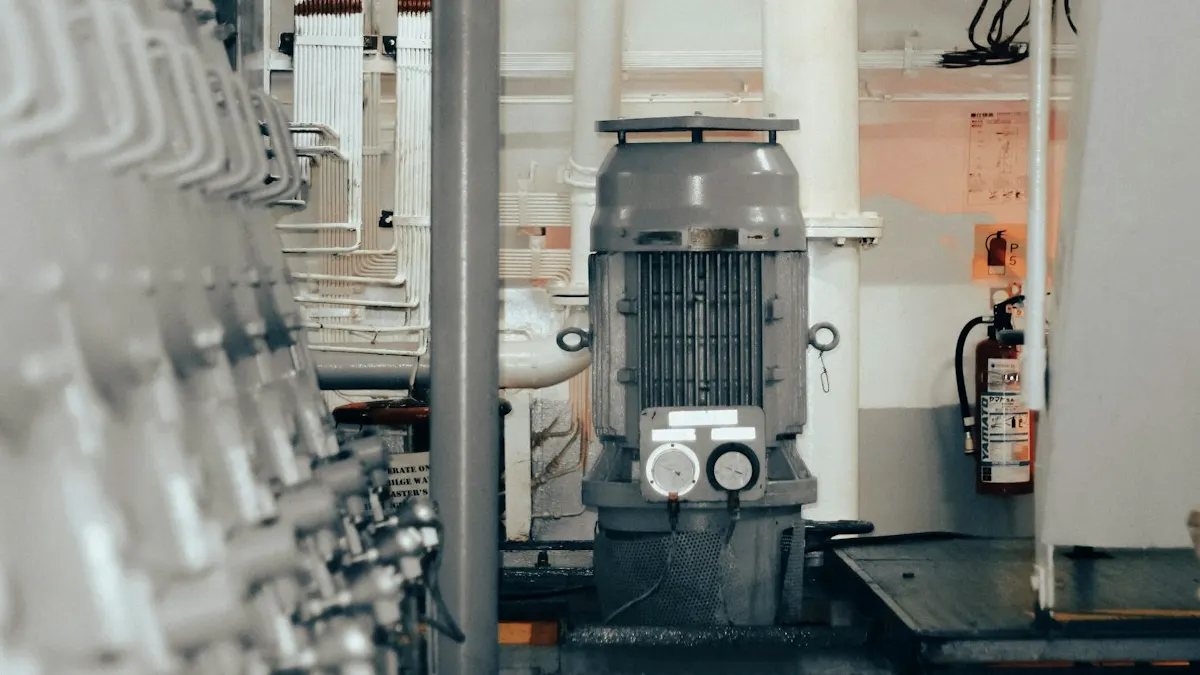
Test it a few times a year, and before spring storm season.
The discharge line and check valve
A pump can run perfectly and still flood the basement if the water can’t get out. Check that the outside end of the pipe isn’t buried, crushed or blocked with leaves, and that it empties far enough from the foundation that water doesn’t flow back in. The check valve, a one-way valve on the pipe above the pump, stops water dropping back into the pit after each cycle; when it fails, the pump runs far more often and wears out early.
Backup pumps and power outages
The heaviest storms are also when the power is most likely to go out. A battery backup pump sits beside the main pump and takes over if the power fails or the main pump can’t keep up. Water-powered backups are another option on city water. An alarm that sounds when the water gets high is a low-cost early warning either way.

Repair or replace?
Replace the pump if the motor is burned out, it runs but moves little water after cleaning, or it’s old and noisy. Many homeowners replace the check valve and float switch at the same time.
When it needs a professional
If the pump runs nonstop in every rain or water still comes in around the edges of the floor, the problem is the drainage system, not the pump: a pit too small, no perimeter drain, or a pump undersized for the water. See how basement waterproofing fixes that. If it already flooded, read what to do about water in the basement.
Sump pump questions
Why is my sump pump running but not pumping water?
Usually a clogged intake screen, a jammed impeller, or a blocked, frozen or kinked discharge line. A failed check valve can also send water straight back into the pit.
Is it normal for a sump pump to run constantly?
During and after heavy rain, frequent running is normal. Running nonstop in dry weather points to a stuck float, a bad check valve or a plumbing leak draining into the pit.
Can I reset a sump pump?
Most pumps have no reset button. Unplug it for a minute, reset the GFCI outlet and breaker, then plug it back in. Some models have thermal overload protection that resets after the motor cools.
Does insurance cover damage from a failed sump pump?
Standard policies usually exclude it. A water backup or sump pump failure endorsement adds coverage; check your policy.