Foundation Repair in Murfreesboro, TN
Cracks above doors, sticking windows or floors that slope usually mean the foundation is moving. Our foundation repair crew in Murfreesboro, TN finds the cause first, explains the fix in writing, then does the work.
Call now: (615) 821-1402- Diagonal cracks at door and window corners
- Doors that stick or won’t latch
- Stair-step cracks in brick or block
- Sloping, bouncy or sagging floors
- Gaps between walls and ceiling or trim
Why Murfreesboro homes settle
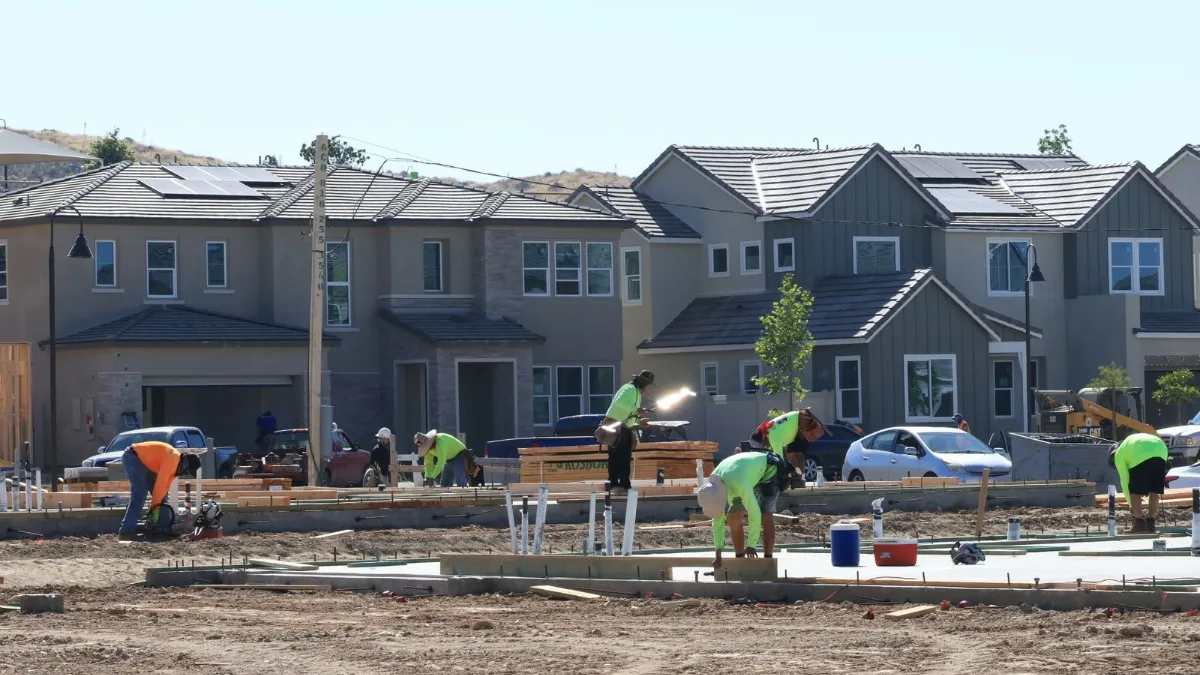
Murfreesboro sits on limestone with clay soil on top. Clay swells when it’s wet and shrinks in a dry summer, so a foundation resting on it moves a little every season. Limestone dissolves slowly underground, which is why this part of Rutherford County has so many sinkholes, and why a corner of a house can drop when the soil under it washes into a void.
Water is usually what sets it off. Gutters that dump at the corner of the house, downspouts without extensions, and yards that slope toward the foundation keep the soil on one side wetter than the other. That uneven moisture is behind a lot of the cracking we see, which is why we look at drainage on every inspection, not only the cracks.
Slab homes vs crawl space homes
A slab foundation usually shows movement as cracked floor tile, a corner that drops, or cracks running from the corners of doors and windows. A crawl space (pier and beam) house usually sags between its supports: the floor gets bouncy or slopes toward the middle as beams, girders or piers lose support or the wood softens from damp air.
The fix is different for each, so we inspect from inside, outside and, on crawl space homes, from underneath. Sagging floors over a wet crawl space often need the crawl space dried and sealed as well, or the new supports end up sitting in the same damp conditions that caused the problem.
Crack repair
Not every crack means the foundation is failing. Concrete shrinks as it cures, so thin vertical cracks in a poured wall or slab are common and often harmless. What matters is width, direction and whether the crack is growing. We measure and mark cracks so movement can be tracked.
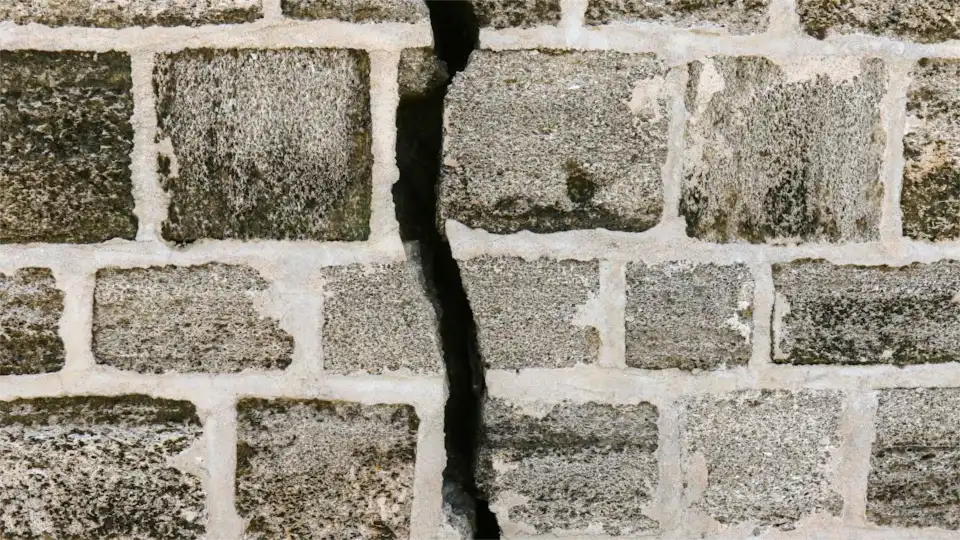
Non-moving cracks that leak are sealed, typically with an epoxy or polyurethane injection that fills the crack through the wall. Cracks that are still moving get the cause fixed first; sealing a crack on a settling wall only hides the problem for a season.
Piers: push vs helical
When part of a foundation has settled, piers carry the load down past the soft soil to something firmer. Two kinds do most of the work:
| Push piers | Helical piers | |
|---|---|---|
| How they go in | Steel tubes driven down using the weight of the house as resistance | Steel shafts with helix plates screwed in with a torque motor |
| Best for | Heavier homes: brick, two-story | Lighter structures, porches, additions, new loads |
| How depth is set | Driven until they hit refusal on rock or dense soil | Installed until the torque reading shows enough capacity |
| Shallow rock | Often reach rock quickly here | Can stop short of rock; capacity checked by torque |
With limestone close to the surface in much of the area, pier depth varies a lot from one corner of a house to the next. Each pier is installed to its own refusal or torque reading, not a fixed length.
Bowing and leaning walls
Basement and block walls bow inward when wet soil pushes against them. Horizontal cracks along the middle of a block wall, or a wall leaning in at the top, are the signs. Depending on how far it has moved, a wall is braced with steel beams, anchored with wall anchors into the yard, or, if it’s moved too far, rebuilt. Reducing the water against the wall is part of every fix, which is where basement waterproofing comes in.
What can wait and what can’t
Can usually wait and be watched
- Hairline vertical cracks that aren’t growing
- Small shrinkage cracks in a newer slab
- A single sticking door after a wet week
Call soon
- Cracks wider than about 1/4 inch, or getting wider
- Horizontal cracks or walls bowing inward
- Water coming through cracks
- Doors and windows suddenly jamming across the house
- Floors sloping or sagging more each month
What a foundation inspection covers
- A floor-level survey to map high and low points
- Crack measurements, photos and direction
- Crawl space supports, beams and moisture readings
- Gutters, downspouts and grading around the house
- A written explanation of the cause and the repair
What changes the scope of a foundation repair
| Factor | Smaller job | Bigger job |
|---|---|---|
| Type of problem | Leaking non-moving crack | Active settlement or bowing wall |
| Extent | One corner | A whole side of the house |
| Access | Open yard, roomy crawl space | Patios, driveways, low crawl space |
| Drainage | Gutters already work | Regrading or drain work needed |
How a settlement repair goes, step by step
- Inspection and floor survey. We map the high and low points of the floors with a level, measure every crack and look at drainage, so the repair targets the part of the house that actually moved.
- Written plan. You get the number and location of piers or supports, what happens to patios or landscaping in the way, and how the area will be restored.
- Excavation. Small holes are dug at each pier location against the footing, or inside the crawl space for interior supports.
- Pier installation. Each pier is driven or screwed down until it reaches refusal or the required torque, and the reading is recorded.
- Lift and stabilize (house leveling). Hydraulic jacks transfer the weight onto the piers. The goal is stabilizing first; we lift only as far as the structure allows without causing new damage.
- Backfill and cleanup. Soil goes back, and we walk you through what changed and what to watch.
Drainage fixes that protect the repair
Piers stop a house from sinking further, but water is usually what started the movement. Extending downspouts six to ten feet from the house, cleaning or upsizing gutters, and regrading soil so it slopes away from the foundation are cheap compared with the repair itself, and they keep the soil under the rest of the house from doing the same thing.
Selling a house with foundation repairs
Buyers and inspectors in Murfreesboro look hard at foundations because of the clay and limestone ground. A documented repair, with the plan, pier locations, depth or torque readings and photos, is far easier to sell than an unexplained crack. Keep all of it with your house records.
Foundation repair FAQ
How do I choose a foundation repair company in Murfreesboro?
Look for a foundation repair contractor who measures floor levels and cracks before recommending anything, explains the cause, puts pier locations and depths in writing, and checks drainage. Be cautious with anyone who quotes a number of piers without an inspection.
Is every crack a foundation problem?
No. Thin vertical shrinkage cracks are common in concrete. Width, direction and growth tell us whether the foundation is moving.
How long does foundation repair take?
Crack injections often take a few hours. Most pier jobs take one to three days once the plan is set; wall bracing is similar.
Will lifting the house crack drywall?
Some cracks may open or close as the house is brought back toward level. Many existing cracks close up; touch-up work afterward is common.
Does homeowners insurance cover foundation repair?
Usually not for settling, shrinking soil or slow movement. Damage from a sudden covered event can be different, and some policies offer sinkhole coverage. Check your policy and ask your agent.
Is a sinkhole under my house?
Most cracks are from ordinary soil movement, not sinkholes. A sudden drop, a depression opening in the yard near the house, or rapid new cracking are reasons to have it looked at quickly.
Can foundation problems cause water in the house?
Yes. Cracks let water into basements and crawl spaces, and settling can open gaps around doors and windows. Fixing the drainage usually helps both.
Related services
Call and tell us what you’re seeing. We’ll explain what it needs.